

Autopilot is a common term, particularly used for aircraft and generally means that something can control itself without human involvement. In case of cars, carmakers are focused on autonomy that allows the vehicle to take over most steering, acceleration and braking functions, however, driver is required to remain attentive to takeover at any moment depending upon the situation. Autopilot today means ‘assisted driving’ as the driver has to be alert at all times.
Autonomous vehicles are considered vital for future of automotive engineering as these will modify the industry since the invention of the automobile. The idea of cars on autopilot has become a reality and many automotive companies are already working on development of self-driving cars and to some extent its correct to say that some vehicles on the market today already have certain autopilot features. Autopilot has the potential to provide benefits including safety on road, no accidents and benefits for disabled persons.
How Autopilot of Cars Works
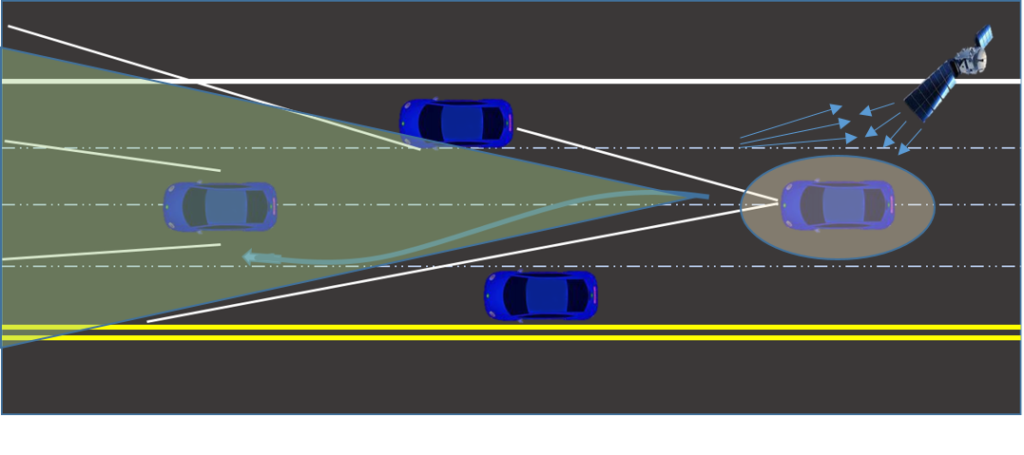
Theoretically, the concept of autopilot for cars incorporates a combination of sensors, cameras and artificial intelligence to navigate and drive the vehicle without human input.
- Tesla. Their Autopilot system consists of cameras and radar to detect other vehicles, pedestrians on the road and any other obstacles. The car can then adjust its speed and steering accordingly and even change lanes and park itself. However, it’s important to note that Tesla’s Autopilot is not yet fully autonomous.
- Waymo. Waymo’s technology has incorporated lidar (a laser-based technology), which creates a 3D map of the car’s surroundings and allows it to navigate without the need for human input. Waymo is a subsidiary of Alphabet, which itself is Google’s parent company.
- General Motors. General Motors has incorporated Cruise Automation in self-driving cars, which incorporates a combination of sensors, cameras and machine learning algorithms that allow the car to learn and adapt to concerned situations.
Levels of Self-Driving Car
A set of levels have been defined by the car industry to classify automation. These levels exhibit features at respective levels as follows: –
| Level 0 | No automation |
| Level 1 | Semi-automated systems. Cruise control is included. |
| Level 2 | Semi-automated systems. Steering, speed and braking are controlled. |
| Level 3 | Automated driving in some conditions. Driver is available to take over. |
| Level 4 | Automated driving in most conditions. |
| Level 5 | Automated driving in all conditions. |
Futuristic Expectations
The benefits of autopilot for cars are numerous: –
- It can greatly reduce the number of accidents caused by human error.
- It will make transportation more accessible to people who are unable to drive due to disabilities or age.
- It can improve traffic flow. Traffic congestion is also expected to be reduced due to ability of inter cars communication and adjustment of speed and routes accordingly.
Vision of Car Manufactures and Development Update
In recently held the International Consumer Electronics Show (CES), the huge technology industry event in Las Vegas, unveiling a fully autonomous prototype vehicle was a focused agenda. During this International CES, focus was on making cars smarter and more inter connected. Keynote address from different representatives of companies includes: –
- Ford (Mr Raj Nair). It is expected that some manufacturer to introduce a completely autonomous vehicle with zero human intervention within five years. It was outlined with a vision of gradually rolling out self-driving cars and focusing early efforts on “high-definition mapping along with favorable environments for sensors.” Till complete automation, benefits from semi-autonomous features like self-parking cars, inter vehicle communication and adaptive cruise control.
- LG Electronics (Mr Scott Ahn). LG’s work revolves around developing methods to connect devices like phones, tablets and wearables to smarter cars. LG has developed a highly customizable solution to connect multiple kinds of devices.”
- Panasonic. The company apprised the forum on following:-
- Panasonic is big supplier of in-dash infotainment systems. Ford’s new Sync 3 system also developed by Panasonic.
- Panasonic is big supplier of batteries for electric cars in the world. Partnership with Tesla to create a huge battery manufacturing plant in the United States is also their achievement.
- Hyundai. Hyundai is in integration with Android Wear-based smart watches that would let riders to unlock or even start a Hyundai Genesis using your watch.
- BMW. BMW was set to demonstrate cars that can park themselves on instructions through a smartwatch app.
- AT&T and Samsung. AT&T had signed up Samsung as a sponsor and technology partner for its Drive Studio, a connected-car development laboratory.
Challenges
To develop fully autonomous cars, car manufacturing companies have to overcome many challenges. Safety, accessibility and affordability are major challenges. In addition, regulations and legislation gor self-driving cars will need to be formulated and implemented. There has been speculation that if all cars become self-driving, many fewer cars would actually be required. There are also concerns that the push toward autonomous cars would cannibalize the car business over all. Contrary, Automobiles, would remain a growth business and higher-tech, self-driving and electric cars are just new opportunities, even if they end up being shared among multiple people.
Conclusion
Autonomous cars will reduce the number of accidents caused by human error and will also assist disabled people with inherent advantages of more efficient driving experience,. In conclusion, the concept of cars on autopilot is though slow but becoming more prevalent. As the manufacturing companies are overcoming challenges, the potential benefits of self-driving cars are coming to society in form of semi-autonomous cars.